Treatment for Panic Attack
Key Takeaways
Panic attacks are common, highly treatable, and not dangerous in themselves—effective psychological treatments like cognitive behavioural therapy can significantly reduce or stop attacks within a few months for many people.
There is an important distinction between experiencing one or two panic attacks and having panic disorder, which involves repeated unexpected panic attacks plus ongoing worry about future attacks and avoidance of everyday situations.
Evidence-based psychological therapies (particularly CBT and exposure-based approaches) are the main long-term treatment for panic attacks, while medications prescribed by a GP can help manage symptoms in the short to medium term.
Practical strategies like slow breathing, grounding techniques, and staying in place can help you manage symptoms of a panic attack when one occurs.
Specialist support is available now—whether through your GP, private therapy with Anxiety Therapy Glasgow (online across the UK or face-to-face in Glasgow), or crisis services if you need immediate help.
If you are experiencing panic attacks, you are not alone. Millions of people across the UK have panic attacks at some point in their lives, and many go on to recover fully with the right treatment. At Anxiety Therapy Glasgow, we specialise in evidence-based treatment for anxiety disorders including panic attacks and panic disorder. We offer online therapy anywhere in the UK as well as in-person sessions in Glasgow, so effective help is accessible whether you are in the city centre, the West End, or hundreds of miles away.
What Is a Panic Attack vs. Panic Disorder?
A panic attack is a sudden episode of intense fear accompanied by overwhelming physical symptoms that seem to come out of nowhere. Attacks typically peak within 5 to 20 minutes, though they can feel much longer when you are in the middle of one. Most panic attacks resolve spontaneously within about 30 minutes, even without any intervention.
Common Symptoms of a Panic Attack
The physical and psychological symptoms can be frightening, but it is important to understand that they are not dangerous in themselves. Common panic attack symptoms include:
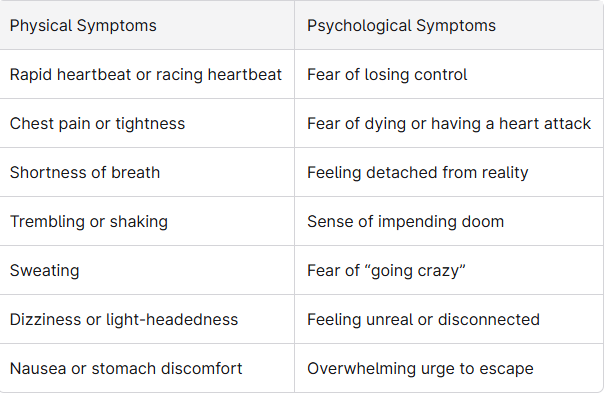
These physical sensations occur because your body’s fight-or-flight response has been triggered inappropriately. Your nervous system is responding as though you are in genuine danger, even when there is no actual threat present.
The Difference: Panic Attacks vs. Panic Disorder
Not everyone who has a panic attack will develop panic disorder. Many people experience one or two attacks in their life—perhaps during a particularly stressful period—and never have another. This is completely normal and does not necessarily require treatment.
Panic disorder is diagnosed when someone has:
Repeated, unexpected panic attacks that seem to come from nowhere
Ongoing worry about having more panic attacks (often lasting a month or more)
Behaviour changes designed to avoid situations where attacks might happen
When panic disorder develops, people often begin avoiding places or situations they associate with attacks—busy supermarkets, public transport, crowded restaurants, or even leaving the house altogether. This avoidance can significantly disrupt day to day life, personal life, and work.
Clinicians use criteria from the Diagnostic and Statistical Manual (DSM-5) or ICD-11 to formally diagnose panic disorder. However, you do not need a formal label or diagnosis before seeking therapy. If panic attacks are affecting your life, that is reason enough to reach out for support at Anxiety Therapy Glasgow.
When to Seek Professional Help
Many people in Glasgow and across the UK wait months or even years before asking for help with panic attacks. Some hope the attacks will simply stop on their own. Others feel embarrassed or worry they are wasting a healthcare professional’s time. The reality is that early intervention typically leads to shorter treatment, less disruption to daily life, and better long-term outcomes.
Signs It Is Time to Seek Help
Consider reaching out to a mental health professional if you notice:
Attacks appearing “out of the blue” without obvious triggers
Worry about having another attack on most days
Avoiding important situations such as work, university, driving, or public transport
Relying on alcohol, other drugs, or medication to cope with anxiety
Panic attacks happening weekly or more frequently
Your personal life or relationships being affected by ongoing worry or avoidance
When to Seek Urgent Medical Help
If you experience new, sudden chest pain, difficulty breathing, or symptoms that feel different from previous panic attacks, it is important to seek medical help immediately. Go to A&E or call emergency services to rule out physical causes such as heart or lung conditions.
While panic attacks can mimic the symptoms of a heart attack, only a medical professional can determine the cause. It is always better to be checked and reassured than to ignore potentially serious health conditions.
What Happens at a GP Assessment
When you visit your primary care provider about panic attacks, they will typically:
Ask about your symptoms, when they started, and how often they occur
Review your medical history and current medications
Ask about family history of anxiety disorders or other mental health conditions
Consider whether a physical examination or blood tests are needed (for example, to rule out thyroid problems, anaemia, or other medical conditions that can cause similar symptoms)
This assessment helps ensure that your symptoms are not caused by an underlying physical problem and helps your GP recommend the most appropriate treatment options.
Evidence-Based Psychological Treatments for Panic Attacks
Psychological therapy is the main long-term treatment for panic attacks and panic disorder. While medications can help manage symptoms, talking therapies—also called talk therapy—address the underlying patterns that keep panic going and provide lasting skills for managing anxiety.
The strongest research evidence supports cognitive behavioural therapy as the first-line psychological treatment for panic disorder. NICE (the National Institute for Health and Care Excellence) recommends CBT as the preferred psychological approach for adults with panic.
Anxiety Therapy Glasgow specialises in anxiety-focused therapies and provides individual treatment plans either online (UK-wide) or face-to-face in Glasgow. Treatment typically runs weekly or fortnightly over 8 to 16 sessions, with specific goals such as reducing attack frequency, understanding what triggers panic attacks, and rebuilding confidence in situations you have been avoiding.
Therapy is active and practical. You will learn specific techniques, complete exercises between sessions, and gradually face the situations and sensations you have been avoiding. This is not simply talking about your problems—it is learning skills and putting them into practice.
Cognitive Behavioural Therapy (CBT) for Panic
Cognitive behavioural therapy examines the cycle between thoughts, physical sensations, emotions, and behaviours that maintains panic. When you have a panic attack, you might think “I’m having a heart attack” or “I’m losing control.” These thoughts increase fear, which intensifies physical symptoms, which in turn seems to confirm that something is terribly wrong.
CBT helps you to:
Understand how the fight-or-flight response creates frightening but harmless bodily sensations
Identify and challenge catastrophic thoughts about what panic symptoms mean
Gradually face feared situations and physical sensations through planned exposure
Learn to tolerate uncertainty and discomfort rather than avoiding them
A key component is interoceptive exposure, where you deliberately and safely induce mild versions of panic sensations—perhaps by breathing faster, spinning gently, or doing light exercise—to learn that these sensations are uncomfortable but not dangerous. Research identifies this as the most beneficial element of CBT for treating panic disorder.
A typical example: Sarah, a 34-year-old marketing professional from Glasgow’s West End, had been experiencing weekly panic attacks for over a year. She had started avoiding the subway, busy shops, and work meetings. After an initial assessment at Anxiety Therapy Glasgow, she began a course of CBT delivered online. Over 12 sessions, she learned to recognise her catastrophic thoughts (“I’ll faint and humiliate myself”), understand why her body was responding the way it was, and gradually return to avoided situations. By session 10, her attacks had reduced from weekly to one mild episode in the previous month. By the end of treatment, she was confidently using public transport across the city and had returned to chairing team meetings.
Through successful CBT, people not only experience fewer panic attacks but also overcome fears of situations they had previously avoided. The skills learned become lasting tools for managing anxiety throughout life.
Acceptance & Commitment Therapy (ACT) and Exposure-Based Work

Acceptance and Commitment Therapy takes a slightly different approach. Rather than trying to eliminate anxiety, ACT focuses on changing your relationship with anxious thoughts and feelings. It uses mindfulness techniques to help you observe anxiety without getting caught up in it, and values-based action to help you move toward what matters most to you—even when feeling anxious.
Exposure therapy is central to both CBT and ACT approaches for panic. The principle is straightforward: by deliberately and repeatedly entering situations or experiencing sensations that trigger panic, your brain gradually learns that they are safe. The fear response naturally decreases over time.
Concrete examples of exposure work include:
Riding the subway or buses across Glasgow city centre again, starting with short journeys at quiet times
Staying in a supermarket queue even when feeling anxious, rather than abandoning the trolley
Gently provoking mild sensations (like spinning in a chair to feel dizzy, or holding your breath briefly) in a controlled way
Attending busy cafés or restaurants and staying until the anxiety naturally subsides
Exposure is always planned collaboratively with your therapist. You will work together to create a hierarchy of fears, starting with situations that feel manageable and building up to more challenging ones. This is not about being pushed into “flooding” or overwhelming experiences—it is about systematic, supported progress at a pace you can tolerate.
At Anxiety Therapy Glasgow, we use structured exposure hierarchies tailored to your specific fears, whether that is fainting, having a heart attack, losing control, or embarrassing yourself in public.
Other Therapies Used at Anxiety Therapy Glasgow
When panic attacks are linked to past traumatic or highly distressing experiences—such as a previous health scare, accident, or traumatic events—EMDR (Eye Movement Desensitisation and Reprocessing) or Rewind Therapy may be helpful. These approaches can reduce the emotional charge of difficult memories that may be contributing to current panic.
Exposure and Response Prevention (ERP) is particularly effective when panic occurs alongside obsessive compulsive disorder or strong health anxiety. ERP helps reduce compulsive checking, reassurance seeking, and other behaviours that temporarily relieve anxiety but maintain it in the long run.
Many people with panic attacks also experience overlapping difficulties such as generalised anxiety disorder, social anxiety, or high-functioning anxiety. Anxiety Therapy Glasgow is experienced in treating these mental disorders simultaneously, creating a treatment plan that addresses all aspects of your difficulties.
All therapy is available via secure video calls, making online therapy accessible across the UK. This is particularly valuable for people who find travelling into Glasgow difficult due to panic or agoraphobia.
Medications Commonly Used for Panic Attacks

Medications for panic attacks and panic disorder are usually prescribed by a GP or psychiatrist. They are often most effective when combined with psychological therapy rather than used alone. Medication can help manage symptoms while you develop the skills to address panic through therapy.
First-Line Medications: SSRIs
Selective serotonin reuptake inhibitors are the most commonly prescribed medications for panic disorder in the UK. Common SSRIs include:
Sertraline (Zoloft)
Citalopram
Escitalopram (Lexapro)
Paroxetine (Paxil)
Fluoxetine (Prozac)
SSRIs are generally well tolerated, with a relatively low risk of serious side effects. However, they typically take 2 to 6 weeks to show clear benefit, and some people experience increased anxiety in the first week or two before improvement begins. Research suggests that with antidepressants, the estimated number needed to treat for remission is around 10—meaning roughly one in ten people who take medication will achieve remission specifically because of it.
Other Medication Options
Serotonin norepinephrine reuptake inhibitors (SNRIs) such as venlafaxine or duloxetine may be prescribed when SSRIs are not suitable or have not worked. Older tricyclic antidepressants are sometimes used as well, though they tend to have more side effects.
Short-acting medications such as benzodiazepines (alprazolam, lorazepam, clonazepam) may be used very cautiously and only short-term for acute management. While they work quickly to reduce panic, they carry significant risks of dependence and are not recommended as a long-term solution for panic disorder treated in ongoing care.
Beta-blockers are sometimes prescribed to manage physical symptoms like rapid heartbeat, though evidence for their effectiveness in panic disorder is limited.
Important Medication Considerations
Never start, stop, or change your medication dosage without consulting your prescribing clinician
Discuss potential side effects, interactions with other medications, and concerns about pregnancy with your GP
Be aware that stopping certain medications suddenly can cause withdrawal effects
Medication works best as part of a comprehensive treatment plan that includes therapy
What to Do During a Panic Attack (Step-by-Step)
If you are experiencing symptoms of panic right now, or want to be prepared for future attacks, these steps can help you manage until the attack naturally passes. Panic attacks typically peak within about 10 minutes and usually subside within 20 to 30 minutes, even if you do nothing.
Step 1: Recognise What Is Happening
Tell yourself: “This is a panic attack. I am not dying, not having a heart attack, and not losing control. This feeling will pass.”
Recognising that you are having a panic attack—rather than a medical emergency—can immediately reduce some of the fear.
Step 2: Slow Your Breathing
Focus on calming breathing exercises. Breathe in slowly through your nose for a count of 4, then breathe out slowly through your mouth for a count of 6. The longer exhale is important—it helps switch off the fight-or-flight response.
Continue this deep breathing pattern for several minutes. Do not worry if it feels difficult at first; simply keep returning to the slow, extended exhale.
Step 3: Use Grounding Techniques
Ground yourself in the present moment using your senses:
Name 5 things you can see around you
Name 4 things you can touch (feel your feet on the floor, your hands on your legs)
Name 3 things you can hear
Name 2 things you can smell
Name 1 thing you can taste
This technique interrupts the spiral of anxious thoughts by bringing attention back to immediate reality.
Step 4: Stay Where You Are (If Safe)
If you are in a safe place, try to stay there rather than fleeing. Leaving reinforces the message to your brain that the situation was dangerous. Staying teaches your brain that you can handle the discomfort.
If you absolutely must move, move slowly and calmly rather than rushing.
Step 5: Repeat a Calm Statement
Use a simple phrase such as:
“This feeling will pass. I have had this before and came through it.”
“My body is safe. This is just adrenaline.”
“Panic cannot hurt me. It will end soon.”
Repeating this can help counter catastrophic thoughts.
Step 6: Wait It Out
Remind yourself that symptoms naturally subside, usually within 10 to 20 minutes. You do not need to “do” anything special to make the attack stop—it will end on its own. These relaxation techniques simply make the episode shorter and less frightening.
In therapy at Anxiety Therapy Glasgow, clients practise these skills between sessions so they become more automatic during real attacks. With practice, you can learn to manage anxiety effectively even during intense episodes.
Reducing the Risk of Future Panic Attacks
While the step-by-step techniques above help during an attack, long-term reduction comes from changing how you respond to anxiety (through therapy) and supporting your body and mind with healthy routines.
Lifestyle Factors That Affect Panic
Several lifestyle factors can make panic attacks more likely or more intense:
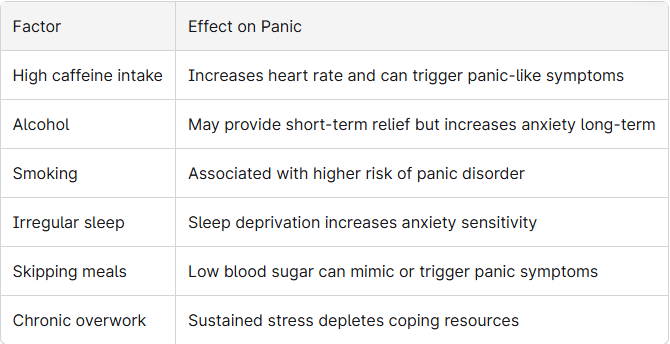
Practical Changes That Help
Making sustainable lifestyle adjustments can reduce symptoms over time:
Limit caffeine: Reduce or eliminate strong coffee, energy drinks, and high-caffeine tea, especially after midday
Be cautious with alcohol: While it may seem to calm anxiety temporarily, alcohol disrupts sleep and increases anxiety the next day
Prioritise enough sleep: Aim for 7-9 hours and keep a consistent sleep-wake schedule
Move regularly: 20-30 minutes of walking or other moderate exercise most days can have a significant calming effect on mood
Eat regular meals: Maintain stable blood sugar with a healthy diet that includes regular meals and snacks
Quit smoking: Evidence shows that smoking cessation decreases both short-term and long-term anxiety symptoms
Consider keeping a brief diary for 2 to 4 weeks to identify triggers and spot patterns. Note when attacks occur, what you were doing, how you slept the night before, and what you ate or drank. This can reveal helpful information about what triggers panic attacks for you specifically.
Self help strategies—including breathing exercises, mindfulness apps, and reputable workbooks based on CBT—can be genuinely helpful. However, they are not a full substitute for professional treatment when panic attacks are frequent, severe, or causing significant disruption to your life.
Dealing with Triggers and Avoidance
One of the most common patterns with panic is the “fear of fear” cycle. People begin to fear the physical sensations of anxiety themselves and start avoiding situations where an attack might happen—busy trains, supermarket queues, meetings, bridges, motorways, or social gatherings.
This avoidance makes sense in the short term. If you leave the supermarket when you feel anxious, the anxiety drops, and you feel relieved. But this teaches your brain that escape was the only way to be safe—and the next time you face a similar situation, the anxiety will be just as bad or worse.
The path forward involves gradual re-engagement:
Identify the situations you have been avoiding
Start with easier versions (e.g., a short bus journey during quiet hours rather than rush hour)
Stay in the situation until the anxiety naturally decreases, even partially
Repeat consistently, gradually building to more challenging situations
Track your progress to maintain motivation
Small, consistent steps are more effective than occasional heroic efforts. Each successful exposure teaches your brain that you can handle the situation and that the feared catastrophe did not occur.
Anxiety Therapy Glasgow can design and support personalised exposure plans for you, sometimes integrating real-world tasks between therapy sessions to accelerate progress.
How Anxiety Therapy Glasgow Can Help
Anxiety Therapy Glasgow is a specialist private clinic for anxiety disorders, based in Glasgow and working with adults anywhere in the UK via secure online therapy. We focus specifically on evidence-based treatment for conditions including panic attacks, panic disorder, social anxiety, generalised anxiety disorder, health anxiety, obsessive compulsive disorder, and high-functioning anxiety.
What We Offer
Our approaches for panic attacks and panic disorder include:
Cognitive Behavioural Therapy (CBT) – the gold-standard treatment for panic
Acceptance & Commitment Therapy (ACT) – for changing your relationship with anxiety
Exposure and Response Prevention (ERP) – particularly for panic with OCD or health anxiety features
EMDR and Rewind Therapy – when panic is connected to traumatic events or distressing memories
All therapies are evidence-based or widely used for anxiety-related problems, and treatment is tailored to your specific situation rather than a one-size-fits-all approach.
Flexible Access
We offer:
Online therapy via secure video calls—accessible anywhere in the UK
In-person sessions in Glasgow city centre and West End
Flexible appointment times that can fit around work, university, or family commitments
The Assessment Process
When you contact us, we begin with an initial consultation to understand your history, what triggers panic attacks, other difficulties you may be experiencing (such as social anxiety, health anxiety, or OCD), and what you hope to achieve from therapy. Together, we create a collaborative treatment plan with clear goals.
Take the Next Step
If you are experiencing panic attacks and want to explore specialist therapy rather than joining a long waiting list, contact Anxiety Therapy Glasgow directly. You can reach us by phone or through our online contact form to arrange an initial consultation. Panic attacks are treatable, and you do not have to manage them alone.
FAQ: Treatment for Panic Attacks
How long does treatment for panic attacks usually take?
Many people notice some improvement within 4 to 6 sessions of focused therapy. More substantial and lasting change often occurs over 8 to 16 sessions, depending on how long the problem has been present, how much avoidance has developed, and whether there are other issues such as depression, generalised anxiety disorder, or obsessive compulsive disorder. Treatment duration is discussed openly at the start of therapy, and progress is regularly reviewed.
Can online therapy really help with panic attacks?
Yes. Research shows that online therapy is as effective as in-person therapy for most people with panic and anxiety. For some clients, working from home initially feels safer—especially if travelling into Glasgow or sitting in a waiting room triggers significant anxiety. Online sessions are delivered via secure video, and the content and quality of therapy is the same as face-to-face work.
Do I have to talk about my whole life history to get help?
No. Treatment for panic attacks is usually very focused on current symptoms, triggers, and patterns. Some background is helpful—such as when the attacks started, what was happening in your life at the time, and any family history of anxiety—but sessions at Anxiety Therapy Glasgow prioritise practical strategies and present-day change. We are not asking you to spend months exploring your childhood before addressing what is happening now.
What if I am already on medication from my GP?
Therapy can be started whether or not you are taking medication. Many people find that combining medication with psychological therapy gives better results than either approach alone. Therapists do not prescribe or alter medication, but we can liaise with your GP (with your consent) and help you make the best use of both approaches. Some people eventually choose to reduce medication once their therapy skills are well-established, but this is always done in consultation with the prescribing clinician.
Is it possible for panic attacks to come back after treatment?
Setbacks can happen, particularly during stressful life periods. However, people who have completed CBT or ACT-based treatment usually handle any future attacks more confidently and briefly. The skills you learn do not disappear—you will know what to do if symptoms return. Occasional “top-up” sessions are available at Anxiety Therapy Glasgow if you need support in the future, but most people find they can manage independently using the tools they have developed.