Social Anxiety Support Groups UK
Key Takeaways
Social anxiety support groups in the UK come in two main forms: peer-led groups run by people with lived experience (often free or donation-based) and clinical therapy groups facilitated by qualified professionals. Understanding this distinction helps you choose what fits your needs.
There is no single UK-wide directory of social anxiety support groups, so finding the right group requires combining several search methods—checking NHS services, national charities like Anxiety UK, local Mind branches, and online communities like Social Anxiety UK forums.
Support groups can complement professional therapy but should not replace it. For moderate to severe social anxiety, working with a specialist service like Anxiety Therapy Glasgow alongside peer support often produces the best outcomes.
Both online and in-person support options exist across the UK, including Scotland, England, Wales, and Northern Ireland. Online groups remove geographical barriers and may feel less overwhelming as a first step for people with social anxiety disorder.
Many people benefit from attending a support group while also receiving individual therapy—using the group to practise social skills and the therapy sessions to address deeper patterns and develop personalised strategies.
Social anxiety support groups are structured gatherings—either in person or online—where people affected by social anxiety come together to share experiences, coping strategies, and encouragement. This guide focuses on the options available across the UK, covering everything from national charity-run communities to local peer groups and clinical therapy programmes.
Before we go further, it’s important to understand that social anxiety support groups can be incredibly valuable, but they work best as a complement to professional therapy rather than a replacement. Evidence-based treatments like cognitive behavioural therapy, delivered by a specialist service such as Anxiety Therapy Glasgow, address the underlying patterns that keep social anxiety going—something peer support alone cannot do.
Finding the right group in the UK requires some detective work. There is no single central hub or master list covering every option, so you will likely need to combine several approaches: checking NHS resources, contacting mental health charities, searching locally, and exploring online communities. The landscape is a patchwork, but once you know where to look, the options become clearer.
The difference between peer-support groups and clinical therapy groups matters. Peer groups are typically run by volunteers who have lived experience of social anxiety—they offer understanding and community, often at low or no cost. Clinical groups are facilitated by qualified therapists and follow structured treatment protocols. Both have their place, and many people find value in attending both simultaneously.
Whether you are based in Glasgow, Edinburgh, London, Cardiff, Belfast, or a rural area with limited local services, support is available. Many groups now meet online, making specialist help accessible regardless of where you live.

What Is a Social Anxiety Support Group?
Social anxiety—also known as social phobia—is one of the most common anxiety disorders, characterised by persistent fear and anxiety in social situations. People with social anxiety often worry intensely about being judged, embarrassed, or humiliated in front of others. This can affect everything from public speaking and work meetings to casual conversations, phone calls, and social gatherings.
A social anxiety support group is a regular meeting where people with social anxiety come together to share experiences, discuss coping strategies, and offer mutual encouragement. These groups can take place in person at community centres, churches, or therapy clinics, or they can happen online through video calls, forums, or moderated chatrooms.
Most support groups in the UK are peer-led, meaning they are organised and facilitated by people who have lived experience of social anxiety themselves. However, some groups are professionally facilitated by counsellors, psychologists, or therapists who bring clinical expertise to the sessions.
Here’s how to distinguish between the two main types:
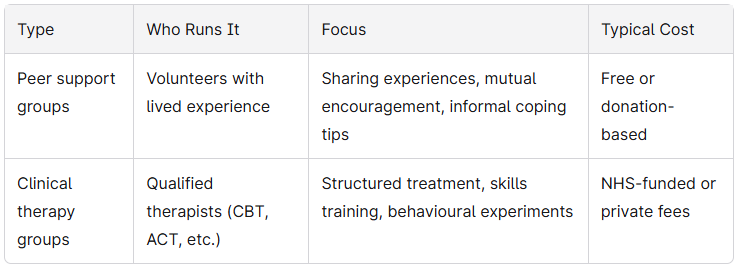
Typical support groups involve 6–15 people and last between 60 and 120 minutes. Most operate with informal ground rules: confidentiality is essential, respect for everyone’s experience, and no pressure to speak before you are ready.
Social anxiety support groups often attract people who feel isolated by their condition—those who struggle with friendships, dating, workplace interactions, presentations, or even basic tasks like making phone calls or eating in public. The common thread is that everyone in the room understands what it feels like to experience emotional distress in situations that most people take for granted.
Benefits of Social Anxiety Support Groups
Joining a group can feel terrifying when social situations are exactly what you fear. The irony is not lost on anyone who has social anxiety. Yet for many people, a support group becomes one of the safest and most gradual ways to face those fears—precisely because everyone there understands the struggle.
The benefits of attending a social anxiety support group include:
Reduced isolation: Realising you are not the only one who experiences these fears can be profoundly relieving. The “I’m the only one” thinking that often accompanies social anxiety starts to break down.
Normalising physical symptoms: Hearing others talk about blushing, sweating, shaking, or brain fog helps normalise these experiences and reduces shame.
Learning practical strategies: Group members share relaxation techniques, cognitive strategies, and real life examples of what has helped them cope with social situations.
Building confidence gradually: Speaking in a supportive environment—even just introducing yourself—provides low-stakes practice that builds over time.
Feeling understood: Sharing things you might never tell friends or family, with people who truly get it, creates a sense of connection that many people with social anxiety rarely experience.
Support groups can also act as a bridge to other forms of help. Being around others who have accessed NHS talking therapies, private therapy, or specialist clinics like Anxiety Therapy Glasgow often encourages group members to take similar steps. Many people attend both a support group and individual therapy simultaneously—using the group to practise social skills and the therapy sessions to work through deeper patterns.
It is worth noting that peer support is not about giving medical advice. It is about shared experience, encouragement, and community. For more structured treatment of social anxiety, professional therapy remains essential.
Types of Social Anxiety Support Groups in the UK
UK provision for social anxiety support is a patchwork of national charities, local volunteer groups, NHS services, and private therapy practices. Understanding the landscape helps you find the right fit.
National Anxiety Charities
Several national organisations run support groups or online communities:
Anxiety UK: Established in 1970, this user-led charity supports people living with anxiety disorders including social anxiety, phobias, and panic attacks. They offer a helpline (03444 775 774, Monday–Friday 10:30am–4:30pm), text support, and a 24/7 chatbot called “Ask Anxia.” They also provide access to therapy services including cognitive behavioural therapy, EMDR, and other evidence-based approaches.
Mind: Through local branches, Mind runs various peer support initiatives. Their online community, Side by Side, provides a forum-style space for people dealing with mental health issues including anxiety.
No Panic: Offers support for panic attacks, phobias, OCD, and other anxiety disorders, including telephone recovery groups.
Social Anxiety-Specific Organisations
Social Anxiety UK (SAUK): A volunteer-led organisation running forums and chatrooms specifically for people with social anxiety. It serves as a central hub for information and peer connection, though it does not provide professional therapy.
Social Anxiety Alliance UK: Works to foster a society where social anxiety is widely understood, with easy access to information, support, and treatment. Their goals include raising public awareness and promoting access to effective treatment.
WalkTheTalk: A peer support community offering free online groups that meet weekly, specifically designed for people with social anxiety.
Online vs In-Person Options
Online groups include:
Video-based groups via Zoom or Teams
Forums and moderated chatrooms (SAUK, Mind’s Side by Side)
Weekly peer support sessions (WalkTheTalk)
In-person groups typically meet in:
Community centres
Church halls (e.g., Social Anxiety Bristol meets twice monthly at Totterdown Baptist Church)
Counselling centres and charity offices
NHS and Private Therapy Groups
Some NHS Talking Therapies services in England (and equivalent services in Scotland, Wales, and Northern Ireland) run time-limited CBT groups for social anxiety. These are clinician-led and follow structured treatment protocols.
Private practices like Anxiety Therapy Glasgow may offer:
Small online CBT-based social anxiety groups for adults across the UK
In-person therapy in Glasgow city centre for clients in the West End, Southside, and surrounding areas
When evaluating options, remember: peer-led groups are often low-cost or donation-based, while clinician-led groups are typically paid therapy (privately) or funded through the NHS.
How to Find Social Anxiety Support Groups UK-Wide
There is no single master list of all social anxiety support groups in the UK. Finding the right group requires trying several routes, but the effort is worthwhile.
Practical Search Steps
Check NHS resources: Search the NHS website for “social anxiety” and “support groups.” Look at your local NHS trust website or NHS Talking Therapies pages for group programmes in your area.
Contact mental health charities: Reach out to your local Mind branch, Anxiety UK, Rethink Mental Illness, or other charities and ask specifically about social anxiety groups in your area.
Search online: Use search terms like “social anxiety support group + [your city/town] + UK” and verify the results by checking meeting dates, location, and facilitator details.
Explore national online communities:
Mind’s Side by Side offers a 24/7 forum-style support space
Social Anxiety UK (SAUK) provides forums and chatrooms specifically for social anxiety—though remember it is volunteer-led, not professional therapy
WalkTheTalk runs free weekly online peer support groups
Look at local examples: Groups like Social Anxiety Bristol demonstrate what local peer support can look like—meeting twice monthly in a community setting with regular attendees.
How Anxiety Therapy Glasgow Can Help
For those who want professional guidance, Anxiety Therapy Glasgow offers online therapy for clients across the UK. An individual assessment with a specialist therapist can help you decide whether to start with one-to-one therapy, a group, or both. This is particularly valuable if local support options are limited or if you want structured treatment for overcoming social anxiety rather than peer support alone.
Verifying a Group Before You Attend
Before committing to any group, consider:
Is the organising charity registered? Check the Charity Commission website for England and Wales, OSCR for Scotland, or the Charity Commission for Northern Ireland.
Are there clear ground rules? Look for safeguarding statements and confidentiality policies.
Is it accessible for you? Consider meeting times, online vs in-person format, and travel requirements.
Practical Preparation
Before your first session:
Email the group organiser in advance to ask questions and introduce yourself
Find out whether you need to book a place or can simply drop in
Clarify whether there is a cost or suggested donation
What to Expect at Your First Social Anxiety Group
Anticipatory anxiety before a first session is completely normal. The good news? Everyone in the room will understand exactly how nerve-racking it feels to walk through that door—or log into that video call.

What Typically Happens
Introductions and ground rules: The facilitator usually begins by welcoming everyone and explaining the group’s structure. Expect to hear about confidentiality (what is shared in the group stays in the group), respect for different experiences, and the reassurance that no one is forced to participate before they are ready.
A round of introductions: People often share their name and a brief reason for attending. You can usually opt out or keep it very short—a simple “I’m here to listen today” is perfectly acceptable.
Discussion: Groups may explore recent challenges, celebrate small successes, or focus on a theme like work anxiety, meeting new people, or public speaking. The atmosphere is typically supportive rather than pressured.
Therapy Groups vs Peer Support Groups
In clinical therapy groups (like CBT-based social anxiety programmes), expect:
Educational content about how social anxiety works, the anxiety cycle, and safety behaviours
Structured exercises such as role-plays, behavioural experiments, or small homework tasks between sessions
A facilitator who guides the group through specific cognitive behavioural techniques
In informal peer support groups, the focus is on:
Open conversation and sharing experiences
Mutual encouragement and support
Less structure, more flexibility in discussion topics
Emotional Reactions
It is common to feel exposed or self-conscious at first. Many people experience relief when they realise others share similar worries—the fear of blushing, saying something “stupid,” or being judged. These feelings of connection often emerge within the first few sessions.
How to prepare:
Arrive a few minutes early to reduce last-minute stress
Prepare a short sentence to introduce yourself if asked
Plan an exit strategy (leaving at the break) if that reduces anxiety—though staying the full session often helps more than leaving early
Online vs In-Person Social Anxiety Support Groups
Both formats can work well for people with social anxiety. The best choice depends on your goals, location, comfort level, and what feels like a manageable next step.
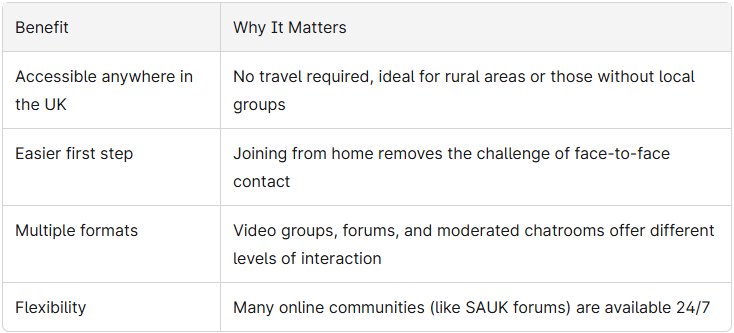
Advantages of Online Groups
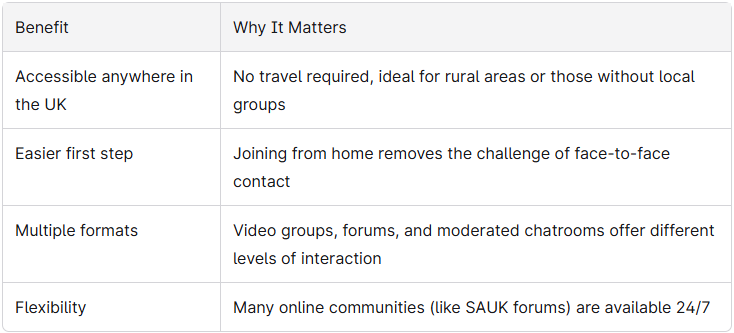
For people whose social anxiety makes leaving the house overwhelming, online groups offer a way to access support without facing additional barriers.
Advantages of In-Person Groups
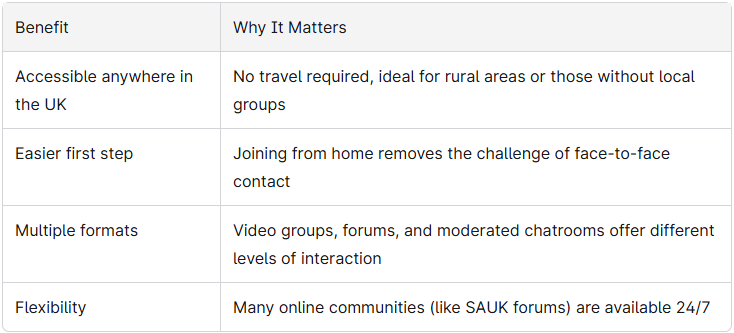
Constraints to Consider
Online challenges:
Technology issues can disrupt sessions
Privacy concerns if you share a home
Screen fatigue, especially if you work online
In-person challenges:
Travel time and cost
Limited local availability, particularly outside major cities
Potential waiting lists for NHS-run groups
How Anxiety Therapy Glasgow Fits In
For UK-wide clients without local specialist help, Anxiety Therapy Glasgow offers online therapy that delivers evidence-based treatment for social anxiety from anywhere. For Glasgow and central-belt clients, in-person therapy provides structured support and can help build up to joining a local peer group as part of treatment.
Choose whichever format feels like a manageable next step—not necessarily the “perfect” one. Starting somewhere is more important than finding the ideal option before taking action.
Psychological Therapies vs Peer Support: How They Work Together
Understanding the distinction between professional psychological therapies and peer support helps you make informed decisions about your care.
Psychological therapies (such as CBT, ACT, Exposure Therapy, and EMDR) are delivered by qualified clinicians—psychologists, counsellors, or therapists with specific training. These treatments follow evidence-based protocols and are tailored to your individual presentation of social anxiety.
Peer support groups are run by people with lived experience. They offer community, encouragement, and shared understanding, but they do not provide clinical treatment or personalised formulation of your difficulties.
CBT for Social Anxiety
Cognitive behavioural therapy is the most well-researched treatment for social anxiety disorder. In simple terms, it involves:
Identifying unhelpful thoughts about judgement, embarrassment, or rejection
Gradually facing feared social situations (exposure) while reducing safety behaviours
Building new, more realistic ways of thinking about social interactions
In the UK, CBT for social anxiety is available through:
NHS Talking Therapies (self-referral available in many areas)
Private therapists and specialist clinics like Anxiety Therapy Glasgow
Specialist Anxiety Services
Services like Anxiety Therapy Glasgow specialise exclusively in anxiety disorders and use evidence-based approaches including:
Cognitive Behavioural Therapy (CBT) as a first-line treatment
Acceptance & Commitment Therapy (ACT) for values-based behaviour change
Exposure Response Prevention for anxiety-driven avoidance
EMDR and Rewind Therapy where trauma contributes to social fears
How Therapy and Peer Support Complement Each Other
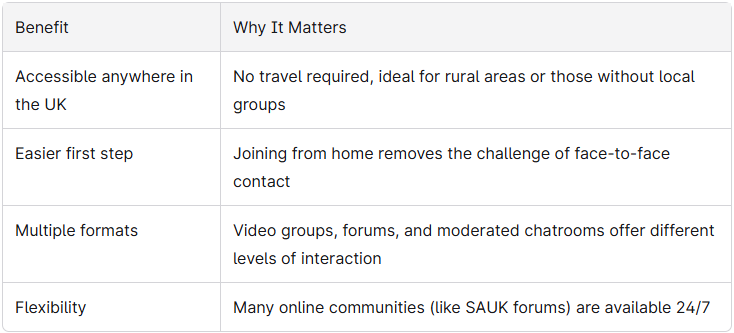
Example: Someone might develop a CBT plan in individual therapy sessions, then use a peer support group to test out new behaviours—like initiating conversations or tolerating uncertainty about how others perceive them.
Another example: A person might start with online therapy to address severe avoidance, then join a local peer group when ready for more social exposure.
For severe or long-standing social anxiety—or social anxiety combined with depression, obsessive compulsive disorder, panic attacks, or other anxiety disorders—professional input is usually essential alongside peer support.
Social Anxiety Support for Children, Teens, and Families

Social anxiety often begins in childhood or adolescence, sometimes mistaken for shyness or introversion. Left unaddressed, it can interfere with school performance, friendships, hobbies, and a person’s ability to develop normal social skills during critical developmental years.
Support Options for Young People
Many UK social anxiety support groups are designed for adults (18+), but options exist for children and young people:
Child and Adolescent Mental Health Services (CAMHS): The NHS provides specialist mental health support for children and teenagers struggling with anxiety disorders, depression, and other mental health problems.
School-based counselling: Many schools offer access to counsellors or mentors who can support young people with social fears.
Youth-focused charities: Organisations like Young Minds and Childline provide information, self help materials, and online tools for teenagers dealing with anxiety.
Some local areas run youth peer groups or projects focused on anxiety and self-esteem, though availability varies significantly by region.
Guidance for Parents and Carers
If you are a parent or carer, watch for signs that might indicate social anxiety:
Repeated school avoidance or distress about school
Extreme fear about presentations, performances, or class participation
Significant worry about parties, clubs, or social activities
Physical complaints (stomach aches, headaches) before social events
Avoidance of eating in front of others or using public toilets
If you are worried, speak to your GP or your child’s school. Learning about anxiety yourself can help you respond calmly and supportively rather than inadvertently reinforcing avoidance.
Professional Assessment Is Essential
While online resources and self help tools have value, parents should seek professional assessment rather than relying solely on peer groups or online communities for a child’s mental health support. Anxiety in young people is highly treatable, but early intervention with appropriate professional input makes a significant difference.
Anxiety Therapy Glasgow works primarily with adults but can offer guidance to parents of older teenagers where appropriate and signpost to specialist child and adolescent services.
When to Seek Professional Help Beyond a Support Group
Support groups offer real value—community, understanding, and practical tips from others who share similar experiences. However, they are not a substitute for professional assessment or therapy when social anxiety is severe, long-lasting, or significantly affecting daily life.
Signs It’s Time to Talk to a GP or Therapist
Consider seeking professional help if you are:
Avoiding work, education, or important life opportunities because of social fear
Using alcohol, drugs, or other substances to get through social situations
Experiencing persistent low mood, hopelessness, or thoughts that life is not worth living
Dealing with coexisting problems such as panic attacks, OCD, generalised anxiety, or health anxiety that are taking over your life
Finding that self help strategies and peer support are not producing meaningful improvement
UK-Specific Pathways
See your GP: Book an appointment and mention “social anxiety” specifically. Give concrete examples of how it affects your life—avoiding promotions, struggling with relationships, or missing important events.
Self-refer to NHS Talking Therapies: In England, many areas allow self-referral to psychological therapy services. In Scotland, Wales, and Northern Ireland, equivalent services are available—your GP can advise on local pathways.
Consider specialist therapy: A clinic like Anxiety Therapy Glasgow provides detailed assessment of social anxiety and related conditions, creating tailored treatment plans using CBT, ACT, Exposure Response Prevention, EMDR, or blended approaches. Online therapy is available for clients across the UK who may not have access to local specialists.
A Note on Medication
GPs sometimes prescribe antidepressants (usually SSRIs) for social anxiety, often in combination with talking therapy. Decisions about medication should always be made with a medical professional, not based on advice from peer groups. Medication can be helpful for some people, particularly when anxiety is severe or when it helps make therapy more accessible.
Social anxiety is highly treatable. Combining the right therapy with appropriate peer support can lead to significant long-term improvement in your relationships, career, and overall quality of life.
How Anxiety Therapy Glasgow Can Support You
Anxiety Therapy Glasgow is a specialist anxiety clinic based in Glasgow that works with clients online across the UK. If you are struggling with social anxiety and want structured, evidence-based treatment, this is what the service offers.
Focus Areas
The clinic specialises in:
Social anxiety and performance anxiety
Panic attacks and agoraphobia
OCD and intrusive thoughts
Generalised Anxiety Disorder (GAD)
Health anxiety
High-functioning anxiety
Formats of Support
Therapeutic Approaches
Treatment is tailored to your specific presentation and may include:
Cognitive Behavioural Therapy (CBT): The first-line evidence-based treatment for social anxiety disorder
Acceptance & Commitment Therapy (ACT): For values-based behaviour change and reducing experiential avoidance
Exposure Response Prevention (ERP): For breaking anxiety-driven avoidance patterns
EMDR or Rewind Therapy: Where past experiences or trauma contribute to current social fears
How to Get Started
Book an initial consultation: You can arrange an assessment session online, regardless of where you are in the UK.
The first session: Covers your history, current difficulties, and goals. Together, you will develop a clear understanding of what is maintaining your social anxiety and create a treatment plan.
Combining therapy with a support group: Individual therapy can sit alongside attendance at a peer support group—many clients find this combination particularly effective for overcoming social anxiety.
You do not have to work through social anxiety alone. Even if there are no local support groups near you, specialist evidence-based help is available through online therapy. The first step is often the hardest, but it is worth taking.
FAQs about Social Anxiety Support Groups in the UK
Are social anxiety support groups free in the UK?
Many peer support groups run by charities or volunteers are free or operate on a donation basis. For example, WalkTheTalk offers free weekly online groups, and Social Anxiety UK forums are free to access. NHS-run therapy groups are free at the point of use, though there may be waiting lists. Private therapy groups and specialist clinics like Anxiety Therapy Glasgow charge fees for their services, which vary depending on the type and length of treatment. It is worth checking with individual groups about any costs before attending.
Will I have to speak at my first meeting?
Most social anxiety support groups allow people to listen quietly during their first session—or for as long as they need. Facilitators typically make it clear that there is no requirement to share more than a brief introduction, and even that can often be skipped if you are not ready. Over time, speaking gradually helps build confidence, but good groups never pressure anyone to contribute before they feel comfortable. The people in the room understand exactly how difficult it can be.
What if there are no social anxiety groups near where I live?
If local in-person options are limited, online groups provide an excellent alternative. National forums like Social Anxiety UK, Mind’s Side by Side community, and video-based groups like WalkTheTalk are accessible from anywhere in the UK. Online therapy with a specialist clinic like Anxiety Therapy Glasgow is another option—you can receive structured treatment for social anxiety regardless of your location. It is also worth contacting local mental health charities directly, as they sometimes know of upcoming groups that are not widely advertised.
Are support groups safe and confidential?
Reputable groups operate with clear ground rules, including confidentiality—what is shared in the group stays in the group—and respect for all members. Before joining, check whether the group is run by a registered charity, NHS service, or qualified therapist, and look for any published safeguarding statements. Online forums have some limitations on confidentiality, as written posts may be visible to more people. If you have concerns, ask the organiser about their confidentiality policy before attending.
Can I attend a support group if I’m already in therapy?
Yes, many people attend both individual therapy and a support group simultaneously. This combination can be particularly effective for social anxiety: therapy provides structured treatment, a personalised formulation, and professional guidance, while the group offers peer support, encouragement, and opportunities to practise social skills in a safe environment. If you are working with a therapist, you might discuss how a support group could complement your treatment plan. The two approaches often work better together than either alone.