Anxiety Forums: How Online Communities Support Your Mental Health
Key Takeaways
Anxiety forums are online communities where people share experiences, ask questions, and receive peer support for conditions like generalised anxiety disorder, panic disorder, social anxiety, and health anxiety—available 24/7 regardless of your location or time zone.
According to the World Health Organization, anxiety disorders affect 264 million people worldwide, highlighting the global nature of these mental health challenges.
Anxiety disorders are more common in women than men, with a global prevalence of 4.6% in women versus 2.6% in men.
These forums complement but never replace professional medical or psychological care; always consult a doctor, psychiatrist, or therapist for diagnosis and treatment of anxiety disorders.
Major platforms such as HealthUnlocked Anxiety Support, 7 Cups, SAUK Discussion Board, and various Facebook groups are moderated to promote safety and respect among users.
Core benefits include feeling less alone, learning practical coping strategies, sharing setbacks without judgment, and accessing support when traditional services aren’t available.
Key risks to be aware of: misinformation, triggering content, confidentiality concerns, and the critical need to seek urgent help through emergency services or crisis lines rather than relying solely on forums during a mental health crisis.
What Are Anxiety Forums?
Anxiety forums are online message boards or chat-based communities dedicated to people living with anxiety disorders and related mental health issues. They serve as digital spaces where individuals grappling with conditions like generalised anxiety disorder (GAD), panic disorder, social anxiety disorder, health anxiety, OCD-related anxiety, and stress-related problems can connect with others who understand their struggle. These forums connect people from around the world, creating a global support network for those affected by anxiety.
The typical format works like this: users create accounts (often anonymous), post topics about their experiences, and receive replies from peers, volunteers, or trained listeners. Unlike structured therapy sessions, forums prioritise unstructured sharing where threads revolve around symptom triggers, recovery stories, and technique exchanges. For example, Mental Health Forum allows users to speak openly and anonymously about various mental health issues, including anxiety and panic attacks. Users often navigate from page to page within the forum, moving between different support threads or informational resources.
Forums can take several forms:
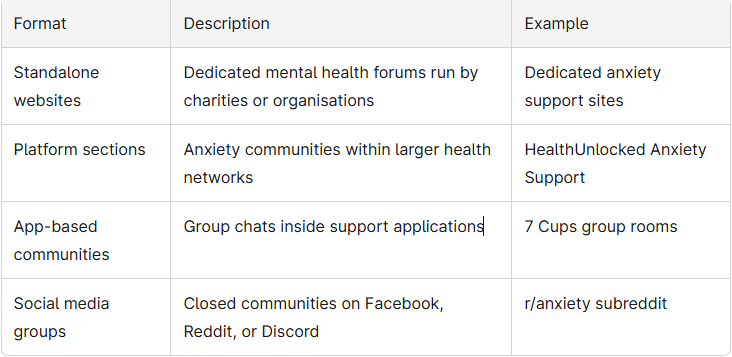
Participation is usually free, with some platforms offering optional paid access to licensed therapists or premium features. This makes forums accessible to adults across different income levels and geographical locations, eliminating the barriers that might prevent someone from seeking in-person support.
Types of Anxiety Forums and Platforms
Anxiety support happens across different formats: classic forums, peer support networks, social media groups, structured support groups, and other forms of entertainment or support that forums may offer beyond the main categories. In 2025, several established and moderated online communities provide safe spaces for discussing anxiety. Understanding these distinctions can help you find a space that matches your needs and communication preferences.
For example, the Anxiety Support forum includes contributions from participants around the globe, fostering a sense of community.
Traditional Web Forums
These feature threaded discussions where members start topics like “panic attack at work” or “guilt after relapse.” Most are organised into subforums covering specific themes:
Work anxiety and career stress
Relationship challenges
Medication experiences and side effects
Physical symptoms and health anxiety
Recovery milestones and setbacks
Sites run by non-profits in the UK and US often follow this format, with clearly defined community guidelines and moderation teams. The dynamic nature of threaded conversations allows for in-depth discussion over days or weeks. For those seeking health anxiety therapy and counselling in Glasgow, specialist support is available online.
Peer Support Networks and Research-Linked Communities
HealthUnlocked’s Anxiety Support community serves as a strong example here. This platform has hosted millions of words of user posts over the years, with content spanning roughly 2012–2020 being used (with consent and anonymisation) in research projects studying lived experiences of anxiety, gender differences between female and male users, and cultural patterns between UK and USA participants.
These communities often partner with academic institutions, meaning your posts might contribute to research that helps everybody affected by anxiety disorders—though personal data is always anonymised and protected.
Real-Time Chat and Listener Platforms
Services like 7 Cups connect users with trained volunteer listeners and, in some cases, licensed therapists. Key features include:
One-on-one chat with trained listeners
Group rooms organised by topic
The ability to invite friends to join discussions
Option to upgrade for professional therapy services
This format suits people who prefer immediate response over waiting for forum replies, though the depth of conversation may differ from threaded forums.
Social Anxiety–Specific Communities
The UK has several focused communities worth noting:
Social Anxiety Alliance UK
WalkTheTalk Online Peer Support Group
Bristol-based peer support groups
Meetup-based anxiety support gatherings
SAUK Discussion Board
Many of these mix in-person meetups with online forums, offering flexibility for those who want to gradually progress from digital interaction to physically meeting others. This can be particularly valuable for social anxiety, where exposure in small steps is often part of recovery. Social anxiety disorder is characterized by a fear of social situations and being judged by others. Panic attacks can occur unexpectedly and are often linked to feelings of fear and anxiety about the future. Self-control issues can exacerbate anxiety, leading to feelings of guilt and shame when one fails to manage impulses.
Social Media and Niche Groups
Closed or private Facebook groups, Discord servers, and Reddit communities (like r/anxiety with over 1 million users) offer alternative spaces for support. However, moderation quality varies significantly.
Before joining any group, read the rules carefully, observe how conflicts are handled, and note whether moderators are active. Variable moderation can mean the difference between a safe place and a space that makes your anxiety worse.
How Anxiety Forums Help: Common Themes and Benefits
While everybody’s story is unique, certain recurring themes appear in anxiety forum posts across years and platforms. Participants in anxiety support forums often share their stories to restore a coherent self and provide meaningful explanations for their experiences. Research indicates that 60-70% of participants report reduced isolation after engaging with these communities. Feeling 'heard' and emotionally validated by others in the forum is also a key benefit, helping members feel understood and supported.
Feeling Understood and Less Alone
Reading posts titled things like “Disappointed in myself” or “I’m tired of not knowing” helps people realise others struggle with self-control, panic, and diagnostic uncertainty too. When someone shares that they experience daily panic attacks or mixed diagnoses (such as ADHD, depression, panic disorder, and possible autism), it can reduce the shame that often accompanies feeling anxious. Talking therapies such as counseling and cognitive behavioral therapy (CBT) can help manage anxiety.
This emotional normalisation is one of the most powerful benefits. Knowing that your fear response—racing heart, derealization, sense of impending doom—is something others experience can interrupt the isolation-anxiety feedback loop that makes symptoms worse.
Sharing Specific Anxiety Triggers
Forum posts often examine detailed situations:
Work stagnation with poor management and fear of long-term career outcomes
Pressure to move out at age 29 despite chronic health issues
Confronting a partner’s hoarding behaviour
Post-alcohol trauma and relapse guilt
Feeling physically unable to attend family events
When someone describes these triggers in detail, others recognise their own patterns and feel validated. This specificity is something you rarely get from general mental health resources or even therapy, where time constraints limit how much context you can share.
Support Around Guilt and Shame
Common thread archetypes include “Overwhelming guilt and shame” and “I made a bad choice and now I can’t stop feeling guilt and shame.” Peers typically respond with:
Perspective-shifting questions
Self-compassion strategies
Suggestions for repairing relationships where appropriate
Personal stories of similar experiences and recovery
Anxiety can make people feel they have acted out of alignment with their core values, which often leads to intense guilt and shame. Additionally, anxiety can lead to feelings of guilt and shame when individuals feel they have let others down or failed to meet expectations.
This form of peer support can restore hope when someone feels stuck in shame spirals.
Practical Coping Strategies
Users share what has helped them in specific situations:
Situation
Strategies Shared
Panic attacks on trains
Breathing exercises, grounding techniques, having a “safe person” to text
Agoraphobia
Graded exposure, baby steps, identifying fear of panic vs fear of places
Difficult family members
Boundary-setting scripts, timing difficult conversations
Burnout
Pacing, permission to rest, job search strategies
Feeling restless and unable to settle to any task is a common symptom of anxiety. Many users emphasize the importance of being mindful and staying present in the moment as a coping strategy for anxiety. Practicing mindfulness and regular exercise are particularly useful for easing anxiety and improving overall well-being.
This advice is experiential peer support, not medical instruction—but it offers practical insights that complement professional guidance.
Long-Term Encouragement
People document their journey over months or years, from initial posts in crisis to later updates showing progress. Someone might first post about being unable to leave their house, then months later share that they’ve started therapy, changed jobs, or secured stable housing.
These stories demonstrate that recovery—while rarely linear—is possible. Setbacks and “baby steps” are normalised as part of the process, which can be more encouraging than clinical literature that focuses primarily on treatment protocols. Understanding your own 'point'—the limits or thresholds at which you need to take action for your well-being—is crucial for long-term progress. It's also important to recognize that anxiety can create a sense of urgency about life changes, leading to pressure to make decisions quickly, which may actually increase anxiety.

Finding a Safe and Supportive Anxiety Forum
Not all online communities are equally safe or well-moderated. Before sharing personal details, evaluate platforms carefully.
When joining anxiety forums, review the forum rules or guidelines. It's important to respect others' beliefs, especially regarding spirituality and religion, and to honor personal perspectives without debate.
The Mix provides discussion boards specifically for young people under 25 to talk about anxiety, OCD, and phobias in a non-judgmental environment.
Signs of a Trustworthy Forum
Look for these indicators:
Clear rules about abusive, racist, sexist, or hateful language (many follow zero-tolerance policies similar to Anxiety UK’s approach)
Visible moderation with options to report posts and users
Transparent information about who runs the forum (e.g., a non-profit based in Oxford, UK, a registered charity, or organizations providing social anxiety therapy)
Active community with recent posts and responses within hours or days
Welcoming atmosphere for newcomers with dedicated introduction threads
Content Boundaries and Legal Considerations
Reputable forums explicitly state they cannot provide professional medical advice and that users should consult qualified health professionals. You’ll typically see disclaimers like:
The information shared here is peer support only and should not replace professional diagnosis or treatment. Always consult your doctor or mental health professional.
Forums also outline that serious threats of harm or illegal activity may trigger safeguarding or legal responses. Abusive behaviour can result in accounts being blocked or, in extreme cases, legal action.
Privacy and Anonymity
To protect yourself:
Use pseudonyms rather than your real name
Avoid sharing full names, exact addresses, or identifiable workplace details
Read privacy policies to understand how your data might be used
Be aware that some platforms partner with research institutions, though data is anonymised
Practical Steps to Choose a Forum
Search for “anxiety forum” plus your country or condition (e.g., “UK social anxiety forum,” “panic disorder support board”)
Lurk for a few days to observe tone and how newcomers are welcomed
Note how conflicts are handled—do moderators intervene constructively?
Check for contact details for administrators if you have questions
Prefer communities linked to recognised charities or mental health organisations
How to Use Anxiety Forums Effectively
Forums can feel overwhelming at first, especially for people who are new to online communities or already feeling anxious about posting.
Starting Gently
Before jumping in, consider:
Reading existing threads on topics like “career anxiety,” “post-alcohol trauma,” or “pressure from family”
Observing how people talk to each other and what kinds of responses get positive reactions
Beginning with a brief introduction in any dedicated “new members” section
There’s no pressure to share everything immediately. Many users lurk for weeks or months before posting.
Responding to Others
When replying to posts:
Focus on validation and sharing your own experiences
Avoid telling others what they “must” do
Respect cultural differences and pronouns
Use trigger warnings for content involving self-harm, abuse, or drugs and alcohol
A response like “I’ve felt that same way and here’s what helped me” tends to land better than “You need to do X.”
Setting Expectations Around Advice
All forum advice is personal opinion. Before acting on suggestions about medication changes, supplements, or significant life decisions:
Check with your doctor or psychiatrist
Look for consensus across multiple replies
Verify claims against reputable sources (NHS website, government health pages)
Some advice might push you toward approaches that could make things worse—always maintain a critical perspective.
Maintaining Healthy Boundaries
Forums can become compulsive, especially when you’re feeling anxious and seeking reassurance. Consider:
Setting time limits (e.g., 30 minutes per day)
Avoiding late-night scrolling when your anxiety or stress is highest
Taking breaks when content becomes triggering
Using mute or block functions for users or topics that upset you
If you find yourself feeling worse after forum visits, that’s valuable information. It might be time to focus on offline support.
Risks, Limits, and When to Seek Professional Help
While anxiety forums are often life-enhancing, they have clear limits and potential downsides that everybody should understand.
Common Risks
Triggering content: Detailed descriptions of panic attacks, self-harm urges, traumatic events, and past abuse can intensify your own symptoms. Even with trigger warnings, exposure to others’ crises can affect you physically and emotionally.
Misinformation: Unvetted advice about diagnoses, medication, and treatments circulates freely. Without moderation, harmful suggestions—like abruptly stopping medication or trying unproven supplements—can spread.
Emotional over-identification: Absorbing others’ fears and worst-case scenarios can heighten your personal anxiety. Research suggests that “fear reinforcement” occurs when groups dwell on symptoms without a recovery focus.
What Forums Cannot Provide
Forums are explicitly not able to offer:
Formal diagnosis of anxiety, ADHD, depression, autism, or other conditions
Emergency or crisis intervention
Comprehensive treatment plans
Medication management
They complement professional care but cannot replace it.
When to Seek Professional Help

Contact your GP or primary care doctor if:
Anxiety interferes with work, study, relationships, or daily functioning for weeks or months
You experience frequent panic attacks that don’t respond to coping strategies
You’re using drugs or alcohol to manage anxiety
You have co-occurring conditions like depression or burnout
A registered therapist, psychologist, or psychiatrist can provide structured interventions like CBT that address root causes.
Crisis Situations
If you or someone else is at immediate risk of harm, contact emergency services (999 in the UK, 911 in the US) or local crisis teams. Do not wait for forum replies.
Keep contact details for national helplines and local mental health services accessible. In the UK, organisations like Samaritans (116 123) offer 24/7 phone support.
Combining Support
Think of anxiety forums as one layer in a wider support network:
Friends and family
Peer support groups (online and in-person)
Professional therapy
Medication where appropriate
Self-help resources and apps
No single approach works for everyone, and most people benefit from multiple forms of support at different points in their journey.
Real-Life Scenarios Shared in Anxiety Forums
These composite portraits—based on typical forum posts—illustrate the diversity of issues discussed in anxiety communities.
Scenario: Career and Future Anxiety
A person in their late 20s posts about being stuck in a stagnant job with poor management and no technical mentoring. Despite being interested in their field, they’ve lost hope about long-term career prospects. The thread fills with responses:
“I was in the exact same position at your age. It took me 18 months to find something better, but I did.”
“Have you considered online courses? I did a data skills course and it helped me move sideways.”
“Your feelings are valid. Bad management isn’t your fault.”
The community normalises their fears while suggesting small steps: updating CVs, exploring skills courses, and recognising that career anxiety is complicated but manageable.
Scenario: Agoraphobia and Family Pressure
Someone describes panic attacks triggered by heat, crowded spaces, or being far from home. Their family keeps pushing them to attend events, saying they need to “push through.” Forum peers respond:
“There’s a difference between fear of panic attacks and fear of people. It sounds like you’re dealing with the former.”
“Baby steps work. I started by sitting outside my front door for 5 minutes.”
“You don’t have to examine whether your family’s approach helps you. If it doesn’t, that’s valuable information.”
The discussion validates setting boundaries while offering practical exposure strategies.
Scenario: Housing and Independence Fears
A 29-year-old with chronic physical and mental health conditions faces pressure from a parent to move out. They’re on waiting lists for crisis accommodation and social housing, feeling stuck in limbo. The response includes:
“I was on housing lists for two years. The waiting is brutal, but you’re not alone.”
“Here’s a link to housing advice services in the UK that might help.”
“Your parent may not understand how the system works. Is there someone who can help explain it to them?”
Peers share resources, validate the complexity of their situation, and offer emotional support through the waiting period.
Scenario: Relationship and Hoarding Issues
A spouse posts about frustration with their partner’s shed hoarding, possibly linked to an acquired brain injury from 15 years past. They don’t want to control their partner but feel overwhelmed. Suggestions include:
“Timing matters. Don’t bring this up after stressful events like Christmas.”
“Some areas have specialist clearing services that work sensitively with people who hoard.”
“This isn’t about respect or love—brain injuries can genuinely change behaviour.”
The discussion acknowledges that relationships are complicated when mental health is involved and offers both practical and emotional perspectives.
Scenario: Lighter Off-Topic Connections
Not every post is about crisis. Threads like “best cat food for new pet parent” appear in many communities, demonstrating how members bond over pets, hobbies, and everyday life. These connections:
Build trust before deeper sharing
Offer mental breaks from heavy topics
Create a sense of community beyond shared struggle
This balance between support and normalcy helps forums feel like genuine communities rather than just crisis resources.
FAQ: Anxiety Forums
Are anxiety forums really anonymous?
Most forums allow pseudonyms and don’t require real names. However, posts can still be searchable by search engines in some cases. Avoid identifiable information like your exact workplace, full name, or address. Always review each site’s privacy policy—some partner with research institutions and may use anonymised post data for studies examining anxiety experiences.
Do I need a diagnosis to join an anxiety forum?
In most communities, a formal diagnosis isn’t required. People join because they feel anxious, overwhelmed, or unsure what they’re experiencing. Many users are in the process of seeking diagnosis or are between healthcare appointments. If symptoms persist or are severe, speaking to a health professional remains important regardless of forum participation.
How do I know if the advice I get is safe?
Treat all forum advice as personal opinion, not medical instruction. Look for consensus across multiple replies rather than following one person’s recommendation blindly. Cross-check claims against reputable sources like NHS pages or registered charities. Always confirm medication or treatment changes with a doctor or psychiatrist before acting on them.
Can anxiety forums make my anxiety worse?
For some people, reading triggering stories or worst-case scenarios increases anxiety. If you notice this pattern, consider setting time limits, avoiding specific topics, and taking breaks. Muting certain threads or users can help. If anxiety consistently increases after forum visits, focusing on offline support and professional help may be more beneficial.
What if I post and nobody replies?
Response times vary based on forum activity and time zones. A slow reply doesn’t mean your problems are unimportant. Try reposting with a clearer, more specific title, or explore more active sections of the site. Platforms with real-time chat options like 7 Cups may offer faster responses. Sometimes posting during peak hours (evenings in your time zone) increases visibility.